

Curtain fabric is one of those decisions that seems aesthetic at first—but in reality, it’s deeply functional. The same linen that looks effortless in a living room can feel impractical in a kitchen. A velvet that works beautifully in a bedroom can overwhelm a small, sunlit space.
Choosing the right fabric isn’t about trends or even colour. It’s about how the room is used, how much light it receives, how often the curtains are handled, and how much maintenance you’re realistically willing to take on.
When you match fabric to function, everything else—how the curtains fall, how they age, how they feel in the space—starts to make sense.
Living Rooms: Balance Light and Presence
Living rooms sit somewhere in between. They’re used throughout the day, often receive the most natural light, and tend to be the most visible space in the home. The fabric here needs to do two things at once—soften light while still holding visual presence.
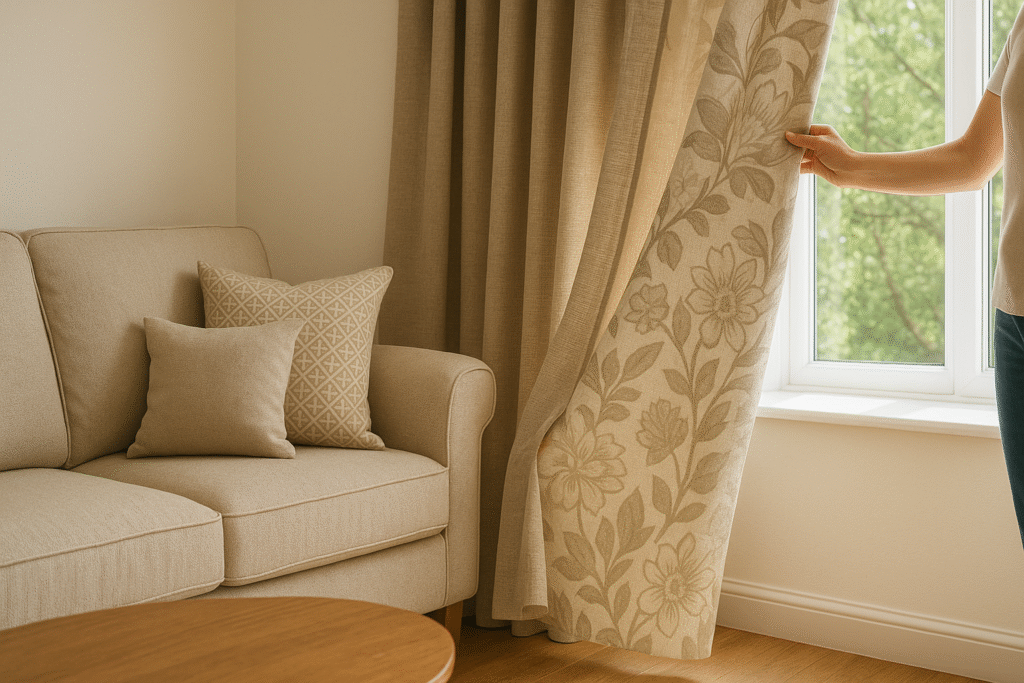
This is where medium-weight fabrics tend to work best. Linen and linen blends are particularly effective because they filter light gently without blocking it entirely. They allow the room to stay bright, but reduce glare enough to make the space comfortable.
Cotton is another strong option, especially when you want something slightly more structured. It holds its shape better than linen and works well in rooms that lean more tailored than relaxed.
What you want to avoid in most living rooms is going too heavy unless the space demands it. Thick blackout fabrics can make the room feel closed off during the day, especially if the windows are a primary source of light.
This is also where custom curtains make a visible difference. Living rooms often have larger windows, and the way fabric falls—its fullness, its weight, its length—becomes much more noticeable. The right fabric, properly scaled, can anchor the entire room.
Bedrooms: Prioritise Light Control and Comfort
Bedrooms are where function becomes non-negotiable.
Light control is the primary concern here. Even if you prefer a softer look during the day, you’ll likely want the ability to block light at night. This is where heavier fabrics or lined curtains come into play.
Velvet is one of the most effective choices for bedrooms. It naturally blocks light, adds insulation, and creates a sense of quiet and enclosure. It also absorbs sound slightly, which can make the room feel more insulated and calm.
If velvet feels too heavy for your space, a cotton or linen curtain with a blackout lining can achieve a similar result while maintaining a lighter visual appearance. This combination gives you flexibility—softness during the day, darkness when needed.
The key here is not just the fabric itself, but how it’s constructed. A lightweight fabric without lining will almost always fall short in a bedroom setting.
Kitchens: Keep It Practical and Durable
Kitchens are less forgiving environments.
Heat, moisture, cooking residue, and frequent cleaning all play a role in how well a curtain fabric performs. This is not the place for delicate materials or anything that requires careful maintenance.
Lightweight, washable fabrics work best here. Cotton and polyester blends are practical choices because they’re easy to clean and hold up well over time. They don’t absorb smells as easily as heavier fabrics and are less likely to show wear quickly.
Shorter curtains or simpler treatments are often more appropriate in kitchens, but if you are using full-length curtains, the fabric needs to be resilient.
This is one space where function should clearly take priority over aesthetic preference.
Dining Areas: Controlled Elegance
Dining spaces don’t require the same level of durability as kitchens, but they still benefit from controlled fabric choices.
The goal here is to maintain a sense of refinement without introducing anything too heavy or overly casual. Medium-weight fabrics again tend to work well—linen blends, cotton, or even slightly richer materials, depending on the formality of the space.
If the dining area is used occasionally, you have more flexibility to choose fabrics that are slightly more decorative like velvet patterned curtains spotting luxe damask or floral motifs. If it’s part of an open-plan layout, the fabric should align with the rest of the home, especially the living area.
Consistency matters more here than contrast.
Bathrooms: Minimal and Moisture-Resistant
Bathrooms require the most restraint.
Humidity and limited space make heavy fabrics impractical. Curtains in bathrooms should be minimal, functional, and easy to maintain.
Lightweight, moisture-resistant fabrics—typically synthetic blends—are the safest choice. They dry quickly, resist mildew, and don’t hold onto dampness the way natural fabrics might.
In many cases, full curtains aren’t necessary at all. Simpler window treatments often work better, but if bathroom curtains are used, they should remain as unobtrusive as possible.
Home Offices: Reduce Glare Without Blocking Light
In a home office, light needs to be controlled, not eliminated.
Screens, work surfaces, and long hours of use make glare a real issue. At the same time, natural light is important for comfort and productivity.
This is where light-filtering fabrics perform best. Linen, cotton, or blends that soften incoming light without darkening the room create a balanced environment. The fabric should reduce harsh sunlight while still allowing the space to feel open.
Heavy blackout fabrics are rarely necessary unless the room doubles as a media space.
Think Beyond Fabric Alone
While fabric is the foundation, it doesn’t work in isolation.
Lining, interlining, and construction all affect how a curtain performs. A lightweight fabric can become suitable for a bedroom with the right lining. A heavier fabric can feel less overwhelming if used in the right proportion.
This is why off-the-rack solutions often fall short. The fabric might be right, but the construction isn’t aligned with the room’s needs.
Final Thought
Choosing curtain fabric based on room function is less about style and more about alignment.
Each room asks for something different—light control, durability, softness, or structure. When the fabric answers that need correctly, the curtain stops feeling like an add-on and starts feeling like part of the room itself.
And that’s ultimately the goal—not just to choose something that looks good, but something that works exactly the way the space requires.